In the late 1960s, there was a bold vision to put Long Island at the center of the surfboard manufacturing world. The plan didn’t just involve making high-quality boards—it included creating a powered, motorized surfboard for the mass market. That company was Surf Jet, and Bunger Surf Shop was right there at the center of the story.
The Birth of Surf Jet

In 1967, Huntington Hartford—heir to the A&P supermarket fortune—decided to dive into the surfboard business. Backed by an inheritance estimated at $90 million, Hartford had a taste for ambitious ventures, and Surf Jet was one of his most audacious.
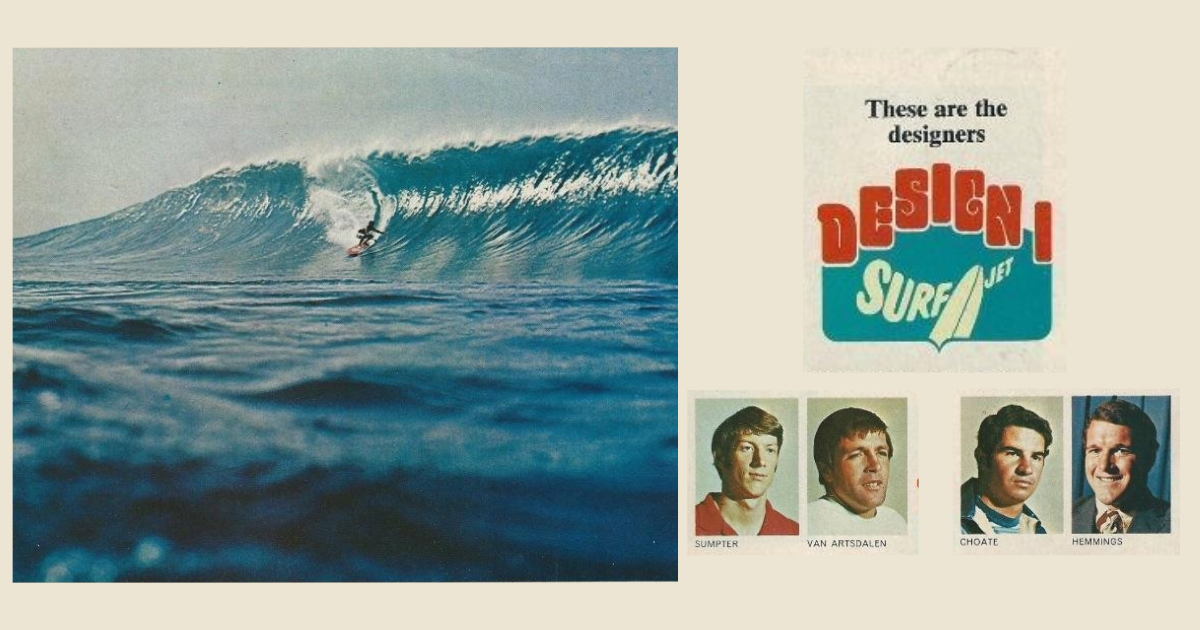
Among the first calls Hartford’s team made was to Long Island’s own Charlie Bunger. Charlie was tapped to anchor production for the new operation. Under an agreement, Bunger Surfboards would remain independent while Charlie also worked with Surf Jet, selling the “Design 1” Bunger model boards through the Bunger Surf Shop network.
The Motorized Surfboard Dream
One of Surf Jet’s original goals was groundbreaking for its time—designing and mass-producing a motorized surfboard. A prototype was built, but it proved to be full of glitches, requiring endless R&D. Eventually, the team realized that focusing on conventional surfboard production was the smarter move, and the motorized dream faded into the background.
A State-of-the-Art Surfboard Factory on Long Island
Surf Jet set up operations in a massive 20,000-square-foot facility at Industry Park in Deer Park, NY. The factory featured five shaping stalls, more than 20 glassing racks, dedicated storage areas, and modern offices. It was, by many accounts, one of the finest surfboard manufacturing facilities of its time.
The People Behind the Boards
Charlie Bunger pulled together an incredibly talented crew, including Jim Hanley, Steve and Eric Eastman, Bob Hawkins, Eddie Fawess, Rolly Eisenberg, and standout craftsman Artie Liljenstrole—known for his lightning-fast ability to build or fix anything.
Shapers like Dennis Choate brought West Coast and Hawaii surf experience to the team, while big names in surfing—Fred Hemmings, Butch Van Artsdalen, Rodney Sumptner, and Dick Catri—lent credibility and star power to the Surf Jet brand. Even industry legends like Tony Channin and Mike Diffenderfer were involved.
The Surf Jet Legacy
With 15–20 employees and an annual output of roughly 3,000 boards, Surf Jet quickly gained brand recognition through ads in Surfer, Surfing, and other East Coast surf publications. But despite its strong start, Surf Jet closed after only three years.
Some believe the company was more of a tax write-off for Hartford’s other investments, while others think management was simply too far removed from the realities of running a surfboard company.
Still, for a few years in the late ‘60s, Long Island wasn’t just a place to ride waves—it was a place trying to reinvent the surfboard itself.
Bunger Surf Shop is proud to have been part of this unique chapter in surfing history. From our role in the Surf Jet story to the custom boards we shape today, our roots in innovative board design and craftsmanship run deep.